
























































-
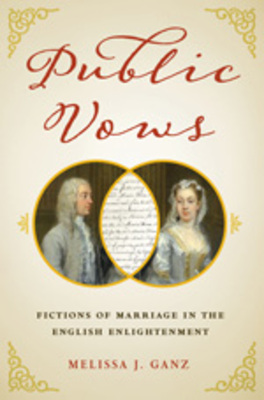
Public Vows: Fictions of Marriage in the English Enlightenment
Melissa J. Ganz
In eighteenth-century England, the institution of marriage became the subject of heated debates, as clerics, jurists, legislators, philosophers, and social observers began rethinking its contractual foundation. Public Vows argues that these debates shaped English fiction in crucial and previously unrecognized ways and that novels, in turn, played a central role in the debates.
Like many legal and social thinkers of their day, novelists such as Daniel Defoe, Samuel Richardson, Frances Burney, Eliza Fenwick, and Amelia Opie imagine marriage as a public institution subject to regulation by church and state rather than a private agreement between two free individuals. Through recurring scenes of infidelity, fraud, and coercion as well as experiments with narrative form, these writers show the practical and ethical problems that result when couples attempt to establish and dissolve unions simply by exchanging consent. Even as novelists seek to shore up the legal regulation of marriage, however, they contest the specific forms that these regulations take.
In recovering novelists’ engagements with the nuptial controversies of the Enlightenment, Public Vows challenges longstanding accounts of domestic fiction as contributing to sharp divisions between public and private life and as supporting the traditional, patriarchal family. At the same time, the book counters received views of law and literature, highlighting fiction’s often simultaneous affirmations and critiques of legal authority.
-
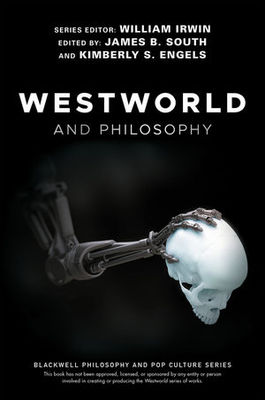
Westworld and Philosophy
James B. South
“We can’t define consciousness because consciousness does not exist. Humans fancy that there’s something special about the way we perceive the world, and yet we live in loops as tight and as closed as the hosts do, seldom questioning our choices, content, for the most part, to be told what to do next.”
—Dr. Robert Ford, Westworld
Have you ever questioned the nature of your reality? HBO’s Westworld, a high-concept cerebral television series which explores the emergence of artificial consciousness at a futuristic amusement park, raises numerous questions about the nature of consciousness and its bearing on the divide between authentic and artificial life. Are our choices our own? What is the relationship between the mind and the body? Why do violent delights have violent ends? Could machines ever have the moral edge over man? Does consciousness create humanity, or humanity consciousness?
In Westworld and Philosophy, philosophers, filmmakers, scientists, activists, and ethicists ask the questions you’re not supposed to ask and suggest the answers you’re not supposed to know. There’s a deeper level to this game, and this book charts a course through the maze of the mind, examining how we think about humans, hosts, and the world around us on a journey toward self-actualization. Essays explore different facets of the show’s philosophical puzzles, including the nature of autonomy as well as the pursuit of liberation and free thought, while levying a critical eye at the human example as Westworld’s hosts ascend to their apotheosis in a world scarred and defined by violent acts.
The perfect companion for Westworld fans who want to exit the park and bend their minds around the philosophy behind the scenes, Westworld and Philosophywill enrich the experience of the show for its viewers and shed new light on its enigmatic twists and turns.
-
The Selected Writings of Hans-Georg Gadamer (Three Volumes)
Pol Vandevelde and Arun Iyer
The project consists of editing and translating fifty-four essays by the German philosopher Hans-Georg Gadamer (1900-2002) in three volumes. The editors and translators have selected and organized these essays of the Gesammelte Werke (‘Complete Works’) published by J.C.B. Mohr (Paul Siebeck) in Tübingen (from 1986 to 1995) in three volumes.
These three volumes will complete the translation of Gadamer into English.
-
Advertising Creative: Strategy, Copy & Design, 4th Edition
Tom Altstiel and Jean M. Grow
Advertising Creative is the first “postdigital” creative strategy and copywriting textbook in which digital technology is woven throughout every chapter. The book gets right to the point of advertising by stressing key principles and practical information students and working professionals can use to communicate effectively in this postdigital age. Drawing on personal experience as award-winning experts in creative advertising, Tom Altstiel and Jean Grow offer real-world insights on cutting-edge topics, including global, social media, business-to-business, in-house, and small agency advertising.
In this Fourth Edition, Altstiel and Grow take a deeper dive into the exploration of digital technology and its implications for the industry, as they expose the pervasive changes experienced across the global advertising landscape. Their most important revelation of all is the identification of the three qualities that will define the future leaders of this industry: Be a risk taker. Understand technology. Live for ideas.
-
Unsettled Boundaries: Philosophy, Art, Ethics East-West
Curtis L. Carter
For readers looking for insights into key issues linking current Eastern and Western views on the arts, aesthetics, and philosophy, Unsettled Boundaries offers fresh and insightful perspectives on current issues as seen by leading Chinese and Western scholars. Represented in the volume are previously unpublished essays of Nöel Carroll, Garry Hagberg, Richard Shusterman, and Jason Wirth alongside writings of Chinese peers Gao Jianping, Peng Feng, Liu Yuedi, Wang Chunchen and Cheng Xiangzhan. The essays in this volume draw attention to evolving cultural and philosophical connections linking the cultures of East and West, while taking note of important differences in the respective cultures. These connections draw upon both traditional Confucian ideas and Chinese Marxist-Leninist aesthetics as well as western pragmatism, somaesthetics, and Wittgenstein-based analytic philosophy. Alongside these philosophical currents, are reflections on issues linking globalization to contemporary Balinese, Chinese, and Japanese arts, by Curtis Carter, Stephen Davies, Garry Hagberg, and Mary Wiseman.
-
Health Care Economics
John B. Davis and Robert McMaster
The analytical approach of standard health economics has so far failed to sufficiently account for the nature of care. This has important ramifications for the analysis and valuation of care, and therefore for the pattern of health and medical care provision. This book sets out an alternative approach, which places care at the center of an economics of health, showing how essential it is that care is appropriately recognized in policy as a means of enhancing the dignity of the individual.
Whereas traditional health economics has tended to eschew value issues, this book embraces them, introducing care as a normative element at the center of theoretical analysis. Drawing upon care theory from feminist works, philosophy, nursing and medicine, and political economy, the authors develop a health care economics with a moral basis in health care systems. In providing deeper insights into the nature of care and caring, this book seeks to redress the shortcomings of the standard approach and contribute to the development of a more person-based approach to health and medical care in economics.
Health Care Economics will be of interest to researchers and postgraduate students in health economics, heterodox economists, and those interested in health and medical care.
-
Collected Works of Bernard Lonergan Volume 14: Method in Theology
Robert M. Doran and John D. Dadosky
Method in Theology stands with Insight as Bernard Lonergan’s most important work. It is Lonergan’s answer to those who would argue that in this time of cultural change and dissolution, the believer is afloat on a sea of multiplying theologies, without rudder or compass. Lonergan was resolute in his refusal to be defeatist on this point. While agreeing that theology must continually change to mediate between religion and culture, he worked out an integral method to guide and control this ongoing process. Method in Theology is the fruit of this labour.
This critical edition has benefited from extensive research into Lonergan's typescripts and from consulting the recordings from several institutes where he lectured over the course of the work’s development. Lonergan's intention was to provide a set of methods that would guide a collaborative community in the ongoing construction of a theology that would move from recovery of the data through resolution of conflicts to contemporary formulations and applications. With this work, the cognitional theory ofInsight: A Study of Human Understanding underwent a surprising set of developments in the form of what he calls functional specialization.
-
Much Ado about Marduk
Jennifer Finn
Scholars often assume that the nature of Mesopotamian kingship was such that questioning royal authority was impossible. This volume challenges that general assumption, by presenting an analysis of the motivations,methods, and motifs behind a scholarly discourse about kingship that arose in the final stages of the last Mesopotamian empires. The focus of the volume is the proliferation of a literature that problematizes authority in the Neo-Assyrian period, when texts first begin to specifically explore various modalities for critique of royalty. This development is symptomatic of a larger discourse about the limits of power that emerges after the repatriation of Marduk's statue to Babylon during the reign of Nebuchadnezzar I in the 12th century BCE. From this point onwards, public attitudes toward Marduk provide a framework for the definition of proper royal behavior, and become a point of contention between Assyria and Babylonia. It is in this historical and political context that several important Akkadian compositions are placed. The texts are analyzed from a new perspective that sheds light on their original milieux and intended functions.
-
Characterizations of Recently Introduced Univariate Continuous Distributions
Gholamhossein G. Hamedani and Mehdi Maadooliat
This monograph is, as far as the authors have gathered, the first one of its kind which presents various characterizations of many important and continuous distributions. It consists of six chapters. The first chapter lists cumulative distribution functions, probability density functions, hazard functions and reverse hazard functions of one hundred thirty-six important univariate continuous distributions. Chapter Two provides characterizations of these distributions based on the ratio of two truncated moments. Chapter Three takes up the characterizations of some of these distributions in terms of their hazard functions. Chapter Four deals with the characterizations of some of these distributions based on their reverse hazard functions. Characterizations of some of these distributions based on the conditional expectations of certain functions of the random variable are presented in Chapter Five. Finally, to make this book self-contained, we present the characterizations of a large number of distributions (without their proofs) that have already been published by Hamedani and coauthors in Chapter Six. (Imprint: Nova)
-

An Examination of Asian and Pacific Islander LGBT Populations Across the United States
Angelique Harris, Juan Battle, and Antonio Jay Pastrana Jr.
This book utilizes personal narratives and survey data from over 500 respondents to explore the diversity of experiences across Asian and Pacific Islander LGBT communities within the United States. Additionally, the authors document and celebrate many of the everyday strengths and strategies employed by this extraordinary population to navigate and negotiate their daily lives.
-

An Examination of Black LGBT Populations Across the United States
Angelique Harris, Juan Battle, and Antonio Jay Pastrana Jr.
This book utilizes personal narratives and survey data from over 2,100 respondents to explore the diversity of experiences across Black LGBT communities within the United States. The authors document and celebrate many of the everyday strengths and strategies employed by this extraordinary population to navigate and negotiate their daily lives.
-

An Examination of Latinx LGBT Populations Across the United States
Angelique Harris, Juan Battle, and Antonio Jay Pastrana Jr.
This book utilizes personal narratives and survey data from over 1,100 respondents to explore the diversity of experiences across Latinx LGBT communities within the United States, including Puerto Rico. The authors document and celebrate many of the everyday strengths and strategies employed by this extraordinary population to navigate and negotiate their daily lives.
-
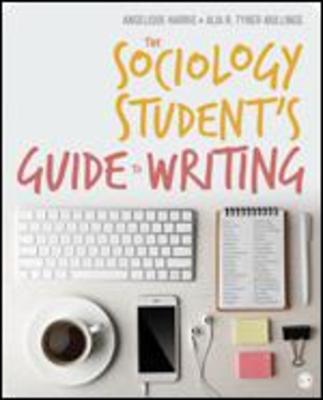
The Sociology Student's Guide to Writing
Angelique Harris and Alia R. Tyner-Mullings
The Sociology Student's Guide to Writing is a brief, economical reference work that gives practical advice about the writing tasks and issues that undergraduate students face in their first sociology courses. Along with more traditional topics, it incorporates valuable information about composing emails, writing for online forums, and using technology for information-gathering and note-taking. Used by itself or in combination with other texts, this book will increase the quality of student writing and enhance their knowledge of how sociologists communicate in writing.
-

Disclosure and Concealment in Psychotherapy
Sarah Knox and Clara E. Hill
Although clients disclose many of their concerns to therapists, they often choose to conceal some of their concerns as well. Equally, therapists occasionally reveal something of themselves to clients via therapist self-disclosure, but typically keep the focus on clients. Such disclosure, whether by clients or therapists, is seldom easy, and is instead often fraught with questions as to what, how much, and why to disclose, as well as concerns regarding the consequences of disclosure. Clearly, disclosure (or the lack thereof) is an important phenomenon of the therapy endeavour.
The chapters included in this book examine various aspects of the disclosure and concealment phenomena, whether from client or therapist perspective. Contributions examine the relationship of therapist self-disclosure to alliance and outcome; the phenomenon of therapist self-disclosure in psychodynamic therapy; client concealment and disclosure of secrets in therapy; young adults’ disclosures in psychotherapy and on Facebook; and lying in psychotherapy. Each offers intriguing insights into the disclosure, or lack of disclosure, in psychotherapy, from the therapist or client perspective. This book was originally published as a special issue of Counselling Psychology Quarterly.
-
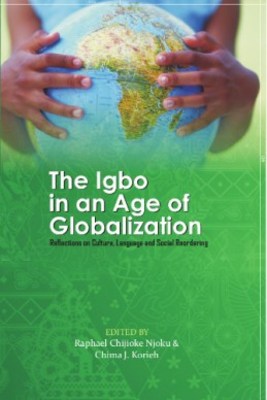
The Igbo in an Age of Globalization
Chima J. Korieh and Raphael Chijioke Njoku
This book is about the Igbo people of Southeastern Nigeria and their changing ways of life in a globalized world. Here we conceive globalization as "the compression of the world and the intensification of consciousness of the world as a whole." While change is as constant as the human journey from the moment of conception to the point of death, European colonialism starting from the late nineteenth century brought new dynamics that would change the face of Africa forever. Yet, the past five decades have revealed that the new pace of change is not slowing down soon. New technological breakthroughs and swift means of communication have facilitated the interaction of peoples from all corners of the world with exchange of cultures and ideas at a pace never experienced in history. While the result of globalization, in all its meanings, has been both exciting and confounding, concerns have arisen as to the manner with which Western cultural trends have permeated all corners of the globe with powerful potency. The various chapters in this book mirror both the observations and anxieties held by students of Igbo studies as alien habits and forces continue to infuse into the Igbo society; remaking the indigenous people’s ways of life in diverse ways.
-
God is Not Nice
Ulrich Lehner
Ulrich L. Lehner reintroduces Christians to the true God—not the polite, easygoing, divine therapist who doesn’t ask much of us, but the Almighty God who is unpredictable, awe-inspiring, and demands our entire lives. Stripping away the niceties with a sling blade, Lehner shows that God is more strange and beautiful than we imagine, and wants to know and transform us in the most intimate way.
With his iconoclastic new book God Is Not Nice, Lehner, one of the most promising young Catholic theologians in America, challenges the God of popular culture and many of our churches and reintroduces the God of the Bible and traditional Christianity. As Lehner writes in the book’s introduction, "We all need the vaccine of the true transforming and mysterious character of God: The God who shows up in burning bushes, speaks through donkeys, drives demons into pigs, throws Saul from his horse, and appears to St. Francis. It’s only this God who has the power to challenge us, change us, and make our lives dangerous. He sweeps us into a great adventure that will make us into different people."
This book is not safe. It may startle and annoy many people—including those who purport to teach and preach the Gospel, but are missing it, according to Lehner. God Is Not Nice intends to overthrow all of our popular misconceptions about God, inviting us to ask deeper questions about the nature of our lives and our relationship with him.
When you're finished with God Is Not Nice, you may find the idols you constructed in God’s name smashed, replaced with a God who will ask you to live an entirely different life full of hope and transformation.
-

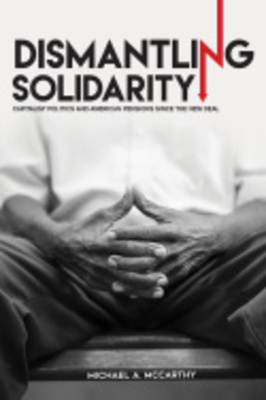
Dismantling Solidarity
Michael A. McCarthy
Why has old-age security become less solidaristic and increasingly tied to risky capitalist markets? Drawing on rich archival data that covers more than fifty years of American history, Michael A. McCarthy argues that the critical driver was policymakers' reactions to capitalist crises and their political imperative to promote capitalist growth.
Pension development has followed three paths of marketization in America since the New Deal, each distinct but converging: occupational pension plans were adopted as an alternative to real increases in Social Security benefits after World War II, private pension assets were then financialized and invested into the stock market, and, since the 1970s, traditional pension plans have come to be replaced with riskier 401(k) retirement plans. Comparing each episode of change, Dismantling Solidarity mounts a forceful challenge to common understandings of America’s private pension system and offers an alternative political economy of the welfare state.
McCarthy weaves together a theoretical framework that helps to explain pension marketization with structural mechanisms that push policymakers to intervene to promote capitalist growth and avoid capitalist crises and contingent historical factors that both drive them to intervene in the particular ways they do and shape how their interventions bear on welfare change. By emphasizing the capitalist context in which policymaking occurs, McCarthy turns our attention to the structural factors that drive policy change. Dismantling Solidarity is both theoretically and historically detailed and superbly argued, urging the reader to reconsider how capitalism itself constrains policymaking. It will be of interest to sociologists, political scientists, historians, and those curious about the relationship between capitalism and democracy.
-

Father of Liberty
J. Patrick Mullins
Dr. Jonathan Mayhew (1720–1766) was, according to John Adams, a “transcendental genius . . . who threw all the weight of his great fame into the scale of the country in 1761, and maintained it there with zeal and ardor till his death.” He was also, J. Patrick Mullins contends, the most politically influential clergyman in eighteenth-century America and the intellectual progenitor of the American Revolution in New England. Father of Liberty is the first book to fully explore Mayhew’s political thought and activism, understood within the context of his personal experiences and intellectual influences, and of the cultural developments and political events of his time. Analyzing and assessing his contributions to eighteenth-century New England political culture, the book demonstrates Mayhew’s critical contribution to the intellectual origins of the American Revolution.
As pastor of the Congregationalist West Church in Boston, Mayhew championed the principles of natural rights, constitutionalism, and resistance to tyranny in press and pulpit from 1750 to 1766. He did more than any other clergyman to prepare New England for disobedience to British authority in the 1760s—and should, Mullins argues, be counted alongside such framers and fomenters of revolutionary thought as James Otis, Patrick Henry, and Samuel Adams. Though many commentators from John Adams on down have acknowledged his importance as a popularizer of Whig political principles, Father of Liberty is the first extended, in-depth examination of Mayhew’s political writings, as well as the cultural process by which he engaged with the public and disseminated those principles. As such, even as the book restores a key figure to his place in American intellectual and political history, it illuminates the meaning of the Revolution as a political and constitutional conflict informed by the religious and political ideas of the British Enlightenment.
-
Ethics in Marketing: International Cases and Perspectives, 2nd edition
Patrick E. Murphy, Gene R. Laczniak, and Fiona Harris
Understanding and appreciating the ethical dilemmas associated with business is an important dimension of marketing strategy. Increasingly, matters of corporate social responsibility are part of marketing's domain.
Ethics in Marketing contains 20 cases that deal with a variety of ethical issues such as questionable selling practices, exploitative advertising, counterfeiting, product safety, apparent bribery and channel conflict that companies face across the world. A hallmark of this book is its international dimension along with high-profile case studies that represent situations in European, North American, Chinese, Indian and South American companies. Well known multinationals like Coca Cola, Facebook, VISA and Zara are featured. This second edition of Ethics in Marketing has been thoroughly updated and includes new international cases from globally recognized organizations on gift giving, sustainability, retail practices, multiculturalism, sweat shop labor and sports sponsorship.
This unique case-book provides students with a global perspective on ethics in marketing and can be used in a free standing course on marketing ethics or marketing and society or it can be used as a supplement for other marketing classes.
-
African Perspectives on Culture and World Christianity
Joseph Ogbonnaya
Unlike the global North, “the ferment of Christianity” in the global South, among the majority of world people, has been astronomical. Despite the shift in the center of gravity of Christianity to the global South, intra-ecclesial tensions globally remain those of the relationship of culture to religion. The questions posed revolve around to what extent Western Christianity should be adapted to local cultures. Should we talk of Christianity in non-Western contexts or of majority world Christianity? Is it appropriate to describe the shift as the emergence of global Christianity or world Christianity? Should Christianity in the global South mimic Christianity in the global North, or can it be different in the light of the diversity of these cultures? Can Africans, Asians, Latin Americans, Europeans and North Americans – the entire global community – speak of God in the same way? This book is devoted to examining varieties of the intercultural process in world Christianity. It understands culture broadly as a common meaning upon which communities’ social order is organized. Culture in this sense is the whole life of people. It is the integrator of the filial bond holding people together and the various institutional structures – economic, technological, political and legal – that guarantee peace and survival in societies, states, and nations, both locally and internationally. As this book shows, the centrality of culture for world Christianity equally showcases the important position the scale of values occupies in world Christianity.
-
The Greatest Mirror: Heavenly Counterparts in the Jewish Pseudepigrapha
Andrei Orlov
A wide-ranging analysis of heavenly twin imagery in early Jewish extrabiblical texts.
The idea of a heavenly double—an angelic twin of an earthbound human—can be found in Christian, Manichaean, Islamic, and Kabbalistic traditions. Scholars have long traced the lineage of these ideas to Greco-Roman and Iranian sources. In The Greatest Mirror, Andrei A. Orlov shows that heavenly twin imagery drew in large part from early Jewish writings. The Jewish pseudepigrapha—books from the Second Temple period that were attributed to biblical figures but excluded from the Hebrew Bible—contain accounts of heavenly twins in the form of spirits, images, faces, children, mirrors, and angels of the Presence. Orlov provides a comprehensive analysis of these traditions in their full historical and interpretive complexity. He focuses on heavenly alter egos of Enoch, Moses, Jacob, Joseph, and Aseneth in often neglected books, including Animal Apocalypse, Book of the Watchers, 2 Enoch, Ladder of Jacob, and Joseph and Aseneth, some of which are preserved solely in the Slavonic language.
“This book fills a lacuna in the understanding of a fascinating yet enigmatic collection of writings of an obscure genre of Jewish pseudepigrapha dealing with heavenly counterparts of human beings.” — CHOICE
“This book is the first complete effort to show how some pseudepigraphical works develop several unique traditions about heavenly counterparts. It is particularly important for many scholars who do not have control of the Slavonic originals of the Ladder of Jacob and 2 Enoch. Orlov also draws on a broad range of unfamiliar sources, including Manichaean and Mandaean materials, which were often neglected by experts who previously investigated the heavenly counterpart imagery.” — Alexander Kulik, coauthor of Biblical Pseudepigrapha in Slavonic Tradition
-
Yahoel and Metatron
Andrei Orlov
In this work, Andrei A. Orlov examines Jewish apocalyptic traditions about the angel Yahoel, tracing their conceptual impact on the development of later rabbinic and Hekhalot beliefs concerning the supreme angel Metatron. The author argues that the figure Yahoel, who became associated in Jewish apocalypticism with the distinctive aural ideology of the divine Name, provides an important conceptual key not only for elucidating the evolution of the Metatron tradition, but also for understanding the origins of the distinctive aural ideology prominent in early Jewish mystical accounts. Andrei A. Orlov suggests that the aural mould of Jewish apocalypticism exercised a decisive and formative influence on the development of early Jewish mysticism.
-
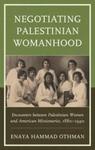
Negotiating Palestinian Womanhood
Enaya Othman
Negotiating Palestinian Womanhood: Encounters between Palestinian Women and American Missionaries, 1880s–1940s is the first analytical study to examine the American Quaker educational enterprise in Palestine since its establishment in the late nineteenth century during the Ottoman rule and into the British Mandate period. This book uses the Friends Girls School as a site of interaction between Arab and American cultures to uncover how Quaker education was received, translated, internalized, and responded to by Palestinian students in order to change their position within their society’s structural power relations. It examines the influence of Quaker education on Palestinian women’s views of gender and nationalism. Quaker education, in addition to ongoing social and political transformations, produced mixed results in which many Palestinian women showed emancipatory desires to change their roles and responsibilities in either radical, moderate, or conservative ways. As many of their writings in the 1920s and 1930s illustrate, Quaker ideals of internationalism, peace, and nonviolent means in conflict resolution influenced the students’ advocacy for cultural nationalism, Arab unity across tribal and religious lines, and responsible citizenship.
-

Obamacare Wars
Daniel Beland, Philip Rocco, and Alex Waddan
Not five minutes after the Affordable Care Act (ACA) was signed into law, in March 2010, Virginia’s attorney general was suing to stop it. And yet, the ACA rolled out, in infamously bumpy fashion, and rolled on, fought and defended at every turn—despite President Obama’s claim, in 2014, that its proponents and opponents could finally “stop fighting old political battles that keep us gridlocked.” But not only would the battles not stop, as Obamacare Wars makes acutely clear, they spread from Washington, DC, to a variety of new arenas. The first thorough account of the implementation of the ACA, this book reveals the fissures the act exposed in the American federal system.
Obamacare Wars shows how the law’s intergovernmental structure, which entails the participation of both the federal government and the states, has deeply shaped the politics of implementation. Focusing on the creation of insurance exchanges, the expansion of Medicaid, and execution of regulatory reforms, Daniel Béland, Philip Rocco, and Alex Waddan examine how opponents of the ACA fought back against its implementation. They also explain why opponents of the law were successful in some efforts and not in others—and not necessarily in a seemingly predictable red vs. blue pattern. Their work identifies the role of policy legacies, institutional fragmentation, and public sentiments in each instance as states grappled with new institutions, as in the case of the exchanges, or existing structures, in Medicaid and regulatory reform.
-
Octavia E. Butler
Gerry Canavan
"I began writing about power because I had so little," Octavia E. Butler once said. Butler's life as an African American woman--an alien in American society and among science fiction writers--informed the powerful works that earned her an ardent readership and acclaim both inside and outside science fiction. Gerry Canavan offers a critical and holistic consideration of Butler's career. Drawing on Butler's personal papers, Canavan tracks the false starts, abandoned drafts, tireless rewrites, and real-life obstacles that fed Butler's frustrations and launched her triumphs. Canavan departs from other studies to approach Butler first and foremost as a science fiction writer working within, responding to, and reacting against the genre's particular canon. The result is an illuminating study of how an essential SF figure shaped themes, unconventional ideas, and an unflagging creative urge into brilliant works of fiction.
A gallery of books authored, co-authored, or edited by Marquette University faculty. The books in this series offer a snap-shot of the monograph publishing efforts of the university faculty. They are offered with a downloadable table of contents. Because of copyright concerns, the complete full text of these books is not available.
Printing is not supported at the primary Gallery Thumbnail page. Please first navigate to a specific Image before printing.